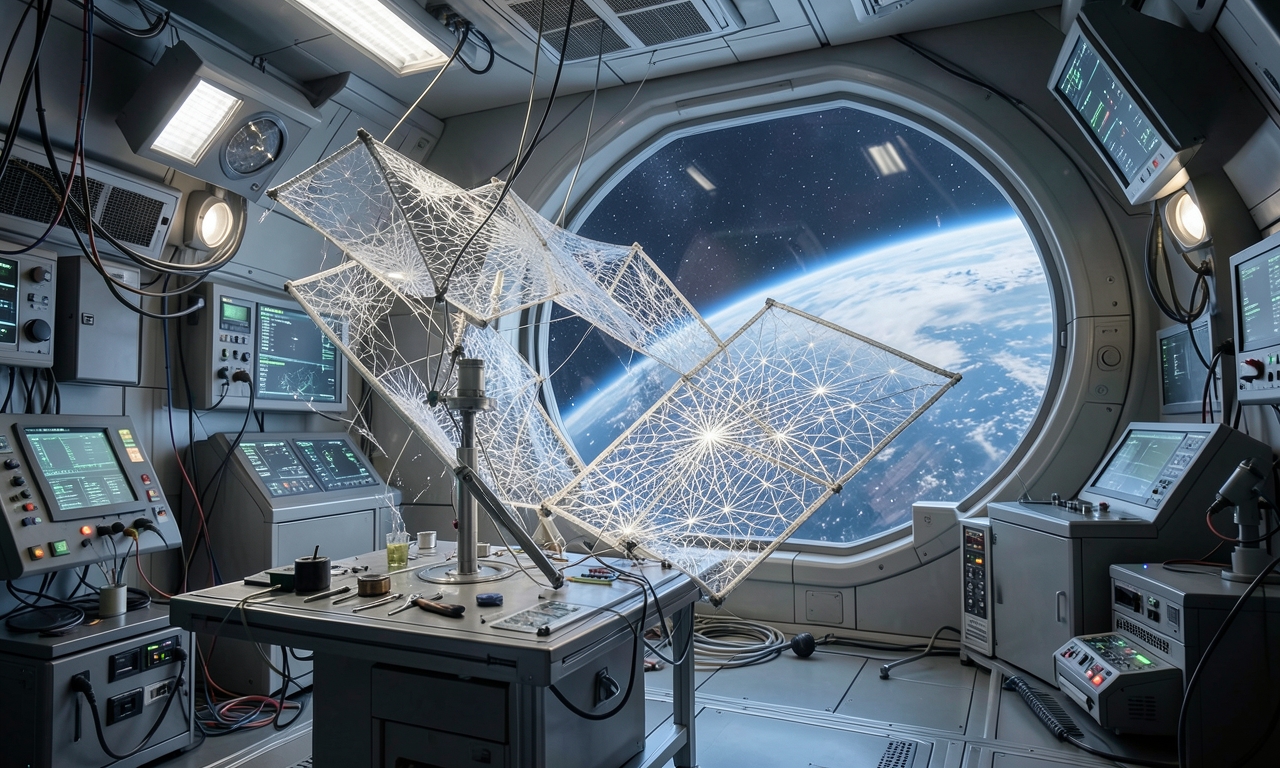
Concept of Diffractive Solar Sails
Asteroids are discovered each year in growing numbers, although none are currently known to be on an imminent collision course with Earth. Nonetheless, there remains a chance that a newly found object could be headed for impact. Scientists are therefore examining methods to deflect such threats well in advance.
A promising approach uses diffractive sails, which do not simply reflect sunlight but bend it via diffraction to produce thrust in a chosen direction. This effect creates a continuous push that can accelerate the sail to very high speeds – theoretically over 100 kilometers per second. At such velocity, the sail could intercept an approaching asteroid early enough to alter its trajectory with a small impulse.
Implementing this idea faces several technical hurdles. The sail material must be extremely lightweight yet capable of withstanding intense solar radiation and temperature extremes in space. Moreover, achieving the precise diffraction pattern requires sophisticated attitude control and reliable navigation to guarantee accurate targeting of the asteroid.
Despite these challenges, research programs worldwide are preparing laboratory tests and flight demonstrations. Space agencies such as NASA and ESA, together with universities and industry partners, are investigating how diffractive sails could be integrated into a future planetary defense system. If the technology matures, it could offer a low‑cost, scalable means of protecting Earth from potentially hazardous asteroids.