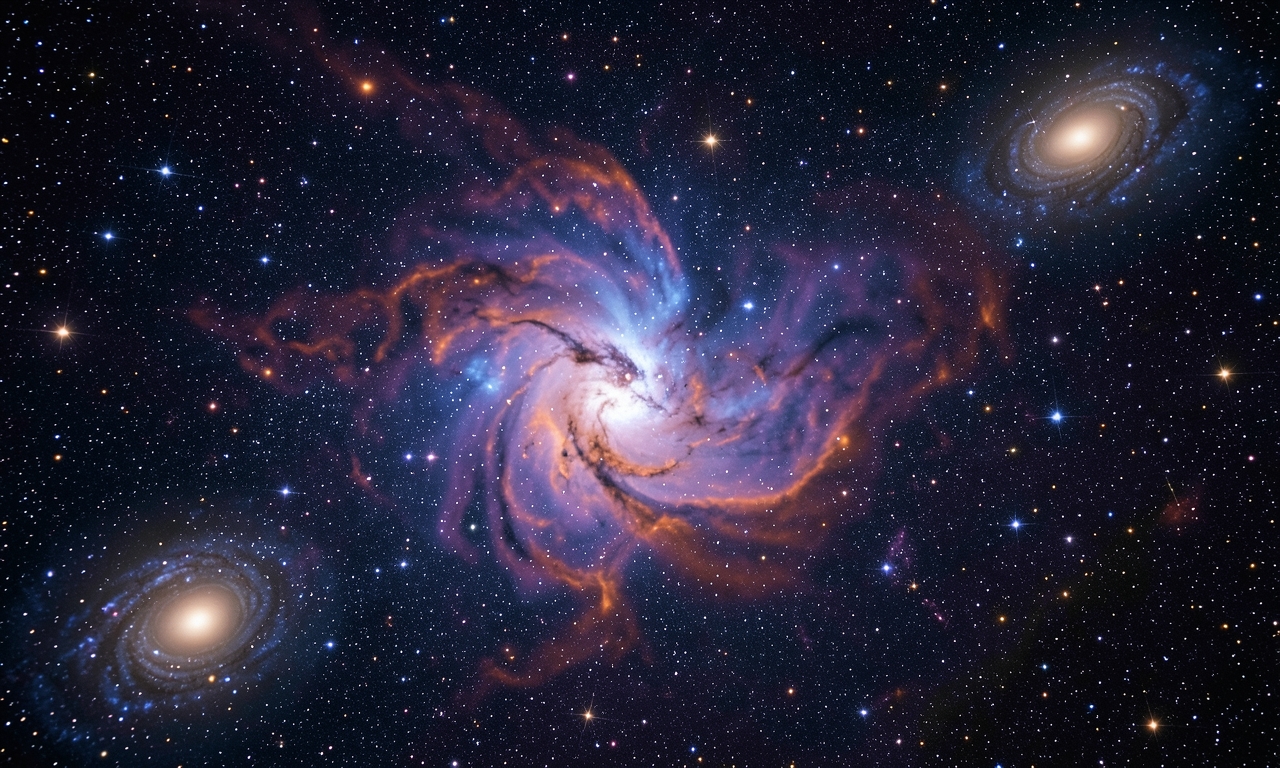
The James Webb Space Telescope has collected light from galaxies that shone roughly 500 million years after the Big Bang. Their spectra display clear lines indicating the presence of carbon, oxygen and other heavy elements.
Previous models predicted that the gas surrounding such young galaxies would remain largely pristine, composed almost entirely of hydrogen and helium, the elements forged in the immediate aftermath of the Big Bang.
The new observations contradict that expectation. They suggest that the first generations of stars had already exploded as supernovae, enriching the surrounding medium with heavier elements.
This early chemical enrichment influences theories about how quickly galaxies can assemble and how their subsequent evolution proceeds.