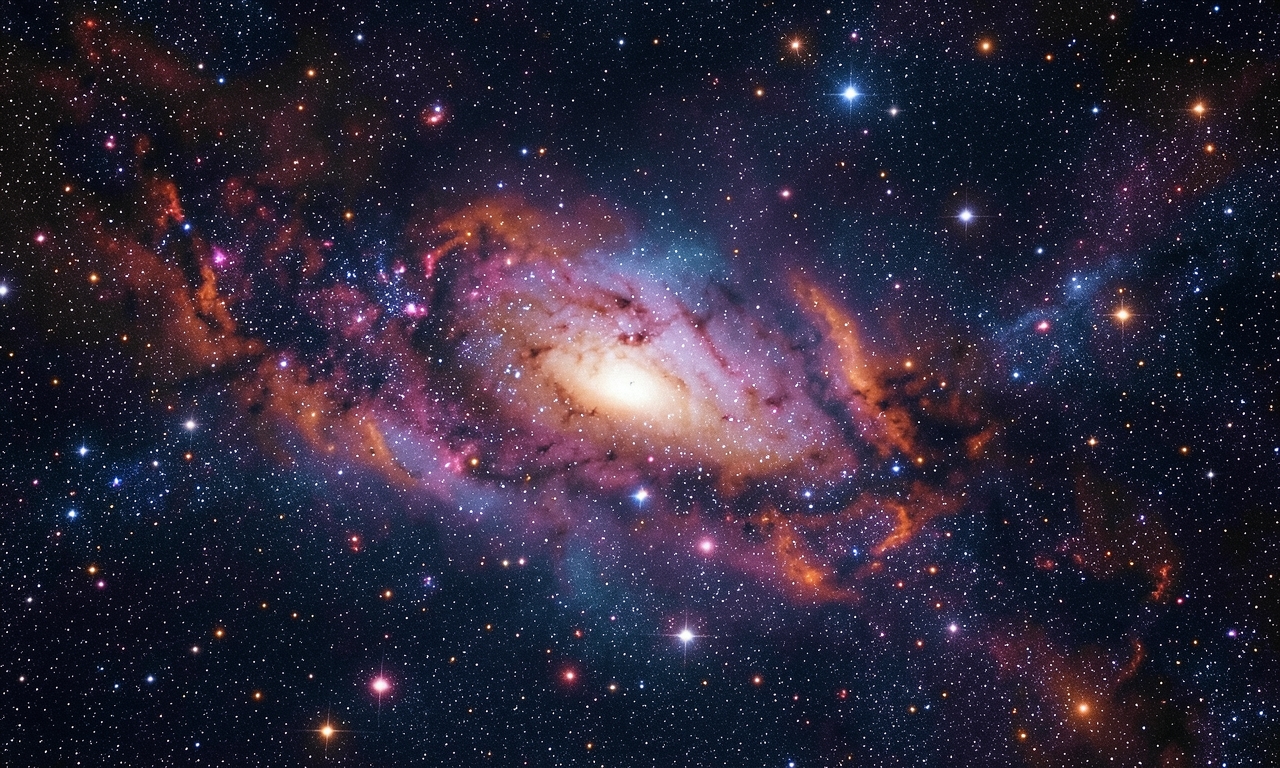
New Hubble Observations
A team led by the University of Utah has used the Hubble Space Telescope to launch an extensive observing campaign aimed at capturing the light from stars in galaxies that formed only a few hundred million years after the Big Bang. Spectra and brightness measurements of thousands of individual stars were recorded to determine their mass, age and chemical composition.
Initial results indicate that the massive stars in these early systems differ markedly from those in today’s Milky Way. They appear hotter, brighter and exhibit a different distribution of elements such as carbon, oxygen and iron. These differences may help explain why early galaxies show unusually high star‑formation rates and atypical light profiles.
Implications for Galaxy Evolution
The collected data currently constitute the largest contiguous dataset of stars in early galaxies. Researchers anticipate that the detailed astrophysical measurements will allow refinement of stellar‑evolution models and chemical‑enrichment processes, leading to a better understanding of how the first stars shaped the light of their galaxies and paved the way for later generations of stars and planets.
The project chiefly exploits Hubble’s capability to achieve high resolution in the ultraviolet and visible bands. Complementary observations with other observatories are planned to complete the picture.