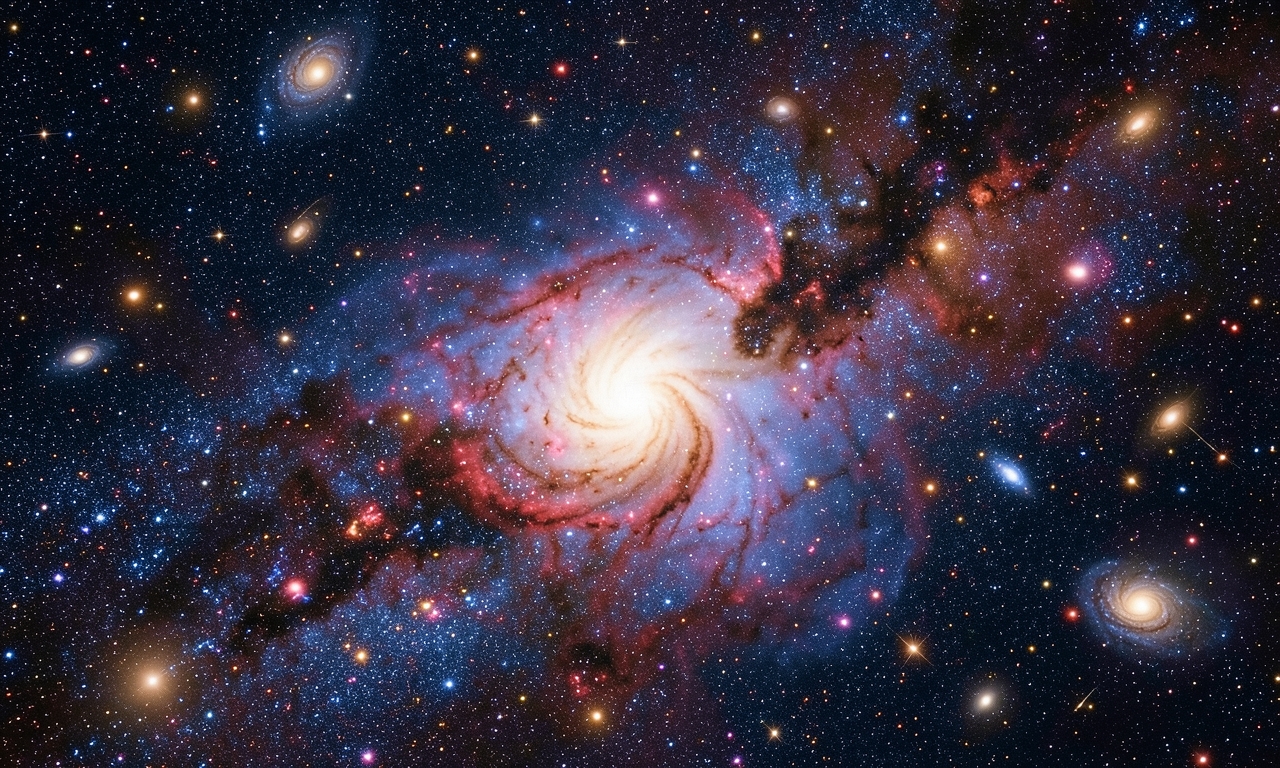
Omega Centauri in the September 25, 2026 APOD
The Astronomy Picture of the Day released on September 25, 2026 presented a high‑resolution image of the globular cluster Omega Centauri, the most massive known globular cluster in the Milky Way.
Located roughly 15,800 light‑years away in the constellation Centaurus, Omega Centauri contains about ten million stars and spans a diameter of around 150 light‑years, making it substantially larger than typical globular clusters in our galaxy.
First recorded as a nebulous object by Edmond Halley in 1677 and later identified as a star cluster by John Herschel, Omega Centauri has been studied extensively with the Hubble Space Telescope and ESO’s Very Large Telescope. These observations reveal multiple stellar populations with varying metal contents, suggesting a complex formation history.
Some researchers interpret the cluster as the remnant of a dwarf galaxy that was merged into the Milky Way. The current APOD image highlights the dense central region and the extended outer areas where red giants and blue stragglers are prominent.
For amateur astronomers, Omega Centauri is an excellent target: even a modest telescope can resolve its bright core, while larger apertures reveal countless individual stars. The cluster is best observed during the northern‑hemisphere spring when it reaches a high elevation in the evening sky.