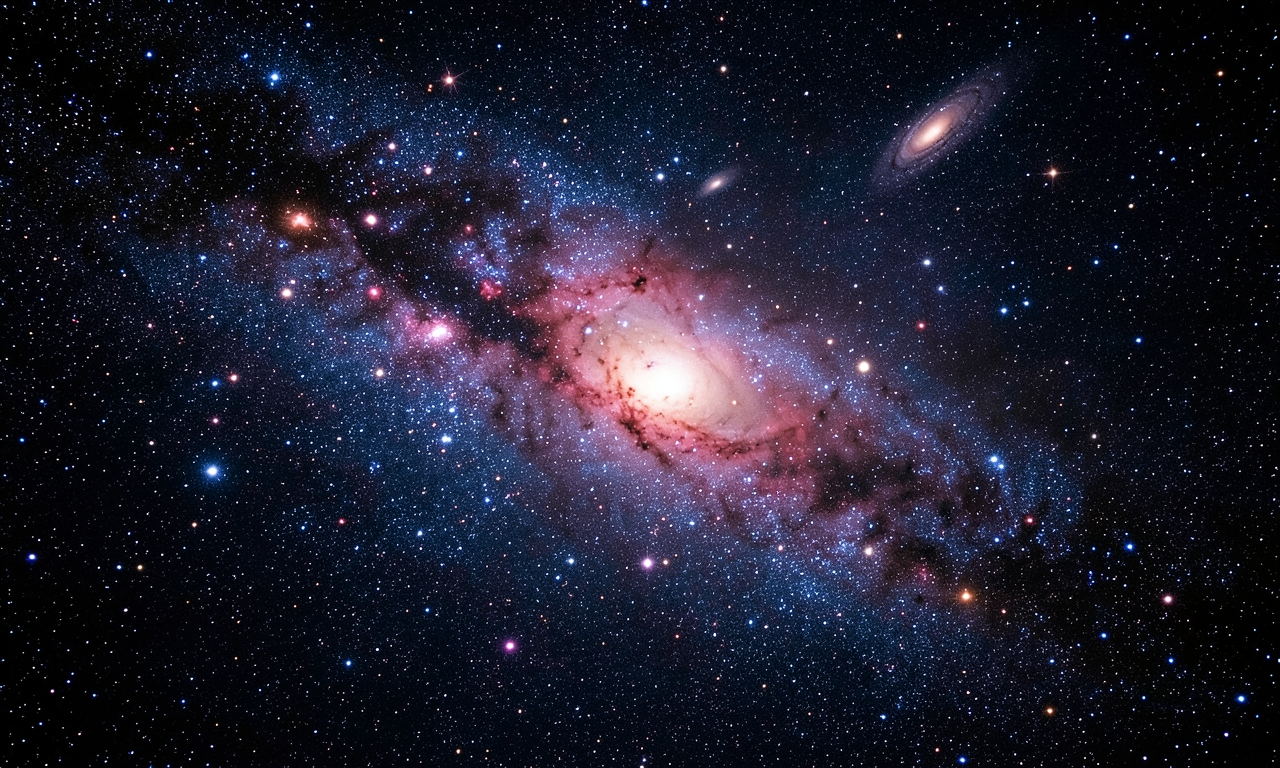
Messier 33 – The Triangulum Galaxy
The Astronomy Picture of the Day (APOD) showcases a different cosmic image each day accompanied by a brief explanation from a professional astronomer. On 18 September 2026 the spotlight fell on the spiral galaxy Messier 33, located in the constellation Triangulum and commonly called the Triangulum Galaxy.
Messier 33 lies roughly 2.73 million light‑years from Earth, making it one of the nearest major galaxies beyond the Milky Way. Its diameter spans about 50,000 light‑years, roughly half the size of our home galaxy, yet it displays a wealth of structures that illuminate galaxy formation and evolution.
The galaxy’s spiral arms are studded with numerous HII regions where energetic young stars ionize surrounding gas, causing it to glow. The most prominent of these is NGC 604, one of the largest known HII complexes. Messier 33 also contains open star clusters and remnants of older stellar populations, offering a varied snapshot of its star‑formation history.
As a member of the Local Group, Messier 33 shares a gravitational bond with the Andromeda Galaxy and the Milky Way. Its proximity and relatively low surface brightness make it a favored target for both professional observatories and amateur astronomers, who can trace its spiral arms and luminous nebulae with modest telescopes.