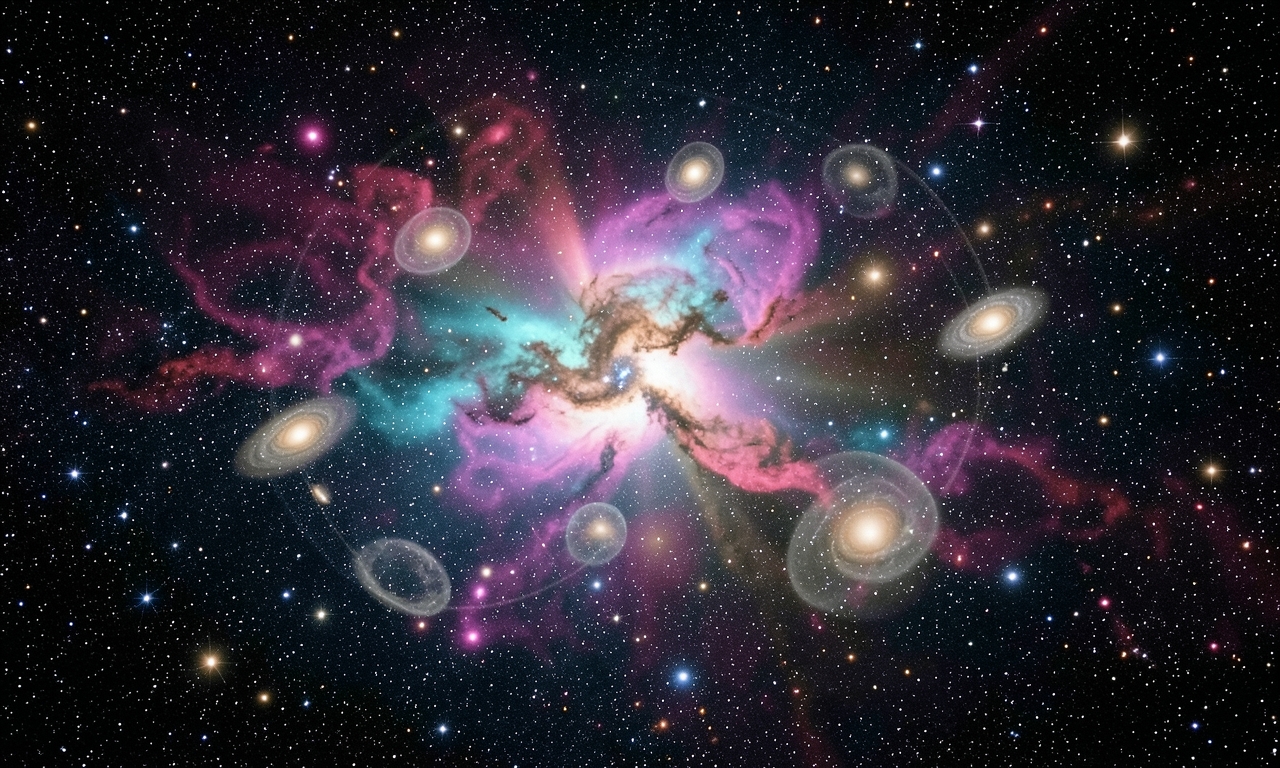
Dwarf galaxies are the most common type of galaxy in the universe, yet they often possess only a fraction of the mass of the Milky Way and emit very little light. Their low luminosity makes them difficult to detect with current instruments, especially at great distances where individual stars cannot be resolved.
The majority of known dwarf galaxies lie in the vicinity of the Milky Way, within what is called the Local Group. At larger distances, the inability to resolve individual stars means many of these faint objects remain undiscovered.
Recently, nearly 50 such faint objects, referred to as ‘ghost galaxies’, were identified around three different host galaxies. This discovery substantially increases the known count of dwarf galaxies and challenges earlier models of their distribution.
The findings suggest that the universe may contain far more of these low‑luminosity systems than previously thought, which could affect future observational strategies.