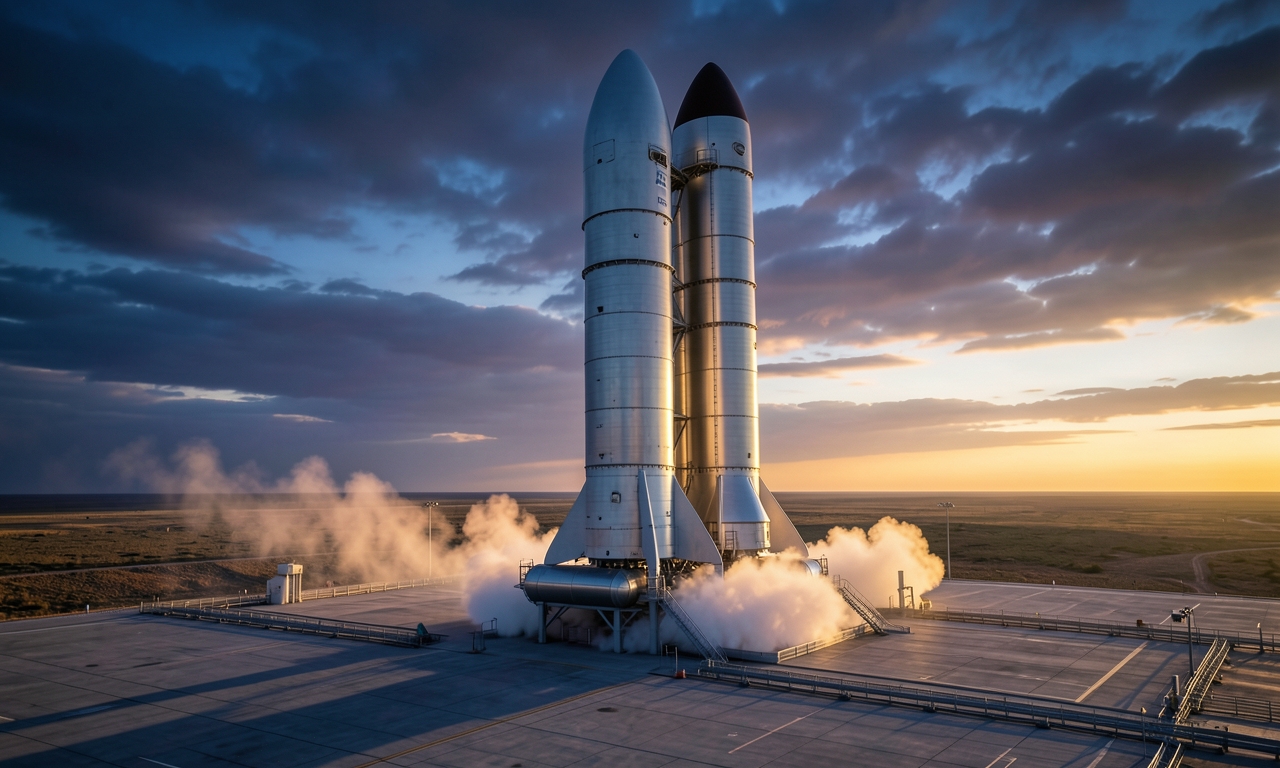
Stacking of Starship and Super Heavy
SpaceX has attached the Starship upper stage, known as Ship 41, to the Super Heavy booster in preparation for the vehicle's first orbital flight test. The move is part of the lead‑up to a planned propellant loading demonstration scheduled for the days before a launch attempt.
The mission, designated Starship Flight 14, is currently targeted for no earlier than September 28, pending approval from the Federal Aviation Administration. The exact launch date will depend on when the FAA issues the required launch license.
During the propellant demonstration, teams will practice loading both stages with liquid oxygen and liquid methane under realistic conditions, then safely draining the tanks. This exercise aims to validate the fueling procedures that will be used on the actual flight.
A successful test would clear the way for Starship to attempt a full Earth orbit, a key milestone toward the goal of a fully reusable launch system for lunar and Mars missions. If the FAA grants permission, the launch could occur at the end of September; otherwise the date will be pushed back accordingly.
Industry analysts note that achieving rapid reusability of both the booster and the ship is central to SpaceX's strategy to lower launch costs and increase flight frequency for future deep‑space endeavors.